Birthday Candles are important for parties because they transform a simple cake into a ceremonial focal point that marks the passage of time, creates a shared ritual for guests, and gives the birthday person a meaningful moment of personal significance — the wish and the blow. Beyond sentiment, candles provide the visual drama that makes birthday photos memorable, signal to guests that the celebratory climax of the event has arrived, and connect participants to a tradition that has been observed across cultures for centuries. No other single party element combines symbolic weight, visual impact, and emotional resonance in the same compact, affordable package. The sections below explore each dimension of this importance in practical detail.
The History Behind Birthday Candles and Why It Still Matters Today
Understanding where birthday candles come from explains why they continue to feel significant even in an age of elaborate party decorations and digital entertainment. The tradition is not arbitrary — it has roots that give it genuine cultural staying power.
Ancient Origins: Light as Protection
The use of candles on birthday cakes is most commonly traced to ancient Greece, where worshippers brought round honey cakes to the temple of Artemis — goddess of the moon — adorned with lit candles to make the cake glow like the moon itself. The smoke from blown-out candles was believed to carry prayers and wishes upward to the gods. A similar practice existed in ancient Rome, where birthday offerings accompanied by candles were made to household deities. In both traditions, the candle was not decoration but a ritual object connecting the individual to something larger than themselves.
The German Kinderfest Tradition
The direct ancestor of the modern birthday candle tradition is the German Kinderfest (children's festival), documented as early as the 18th century. German children received a cake on their birthday with candles representing each year of their age plus one extra candle for the year to come — the flame symbolizing the light of life. The child was to make a wish and blow out all candles in a single breath, with success promising the wish would be granted. This is essentially the practice observed at birthday parties around the world today, largely unchanged after more than 250 years.
Why Historical Depth Adds Value to a Modern Party
When party guests participate in the candle-blowing ritual, they are — whether consciously or not — participating in a practice with centuries of accumulated meaning. This depth is what distinguishes the birthday candle moment from other party activities: it is not simply entertainment but a rite with roots in human experiences of hope, protection, and the marking of time. Research in the Journal of Consumer Psychology (Gal and Rucker, 2011) found that rituals surrounding consumption experiences — including the birthday candle ceremony — significantly increase enjoyment of and emotional engagement with those experiences, even when participants are fully aware the ritual is symbolic.
The Wish Ritual: Why a Simple Moment Carries So Much Emotional Weight
The act of closing your eyes, making a wish, and blowing out candles is one of the most universally recognized birthday party moments in the world. Its importance goes well beyond superstition or childhood magic — it serves real psychological and social functions that make it valuable at every age.
A Rare Moment of Personal Focus in a Social Setting
Birthday parties are inherently social events where attention is distributed across multiple people, conversations, and activities. The candle-blowing moment is one of the very few instances in a party where every person in the room directs their complete attention to a single individual for an uninterrupted period. This concentrated collective attention is emotionally powerful for the birthday person — it communicates, through action rather than words, that this person and this occasion matter to everyone present.
Psychologists describe this type of collective attention as a form of social recognition that satisfies fundamental human needs for belonging and significance. For children in particular, the experience of having a room full of adults and peers focused entirely on them — waiting, watching, and then cheering — creates a memory of feeling genuinely celebrated that persists long after the specific details of the party are forgotten.
The Wish as a Form of Intentional Goal Setting
The requirement to silently formulate a wish before blowing out the candles is, in psychological terms, a brief but structured exercise in identifying what one wants most at a particular moment in life. Research from the Dominican University of California (Matthews, 2015) found that the simple act of writing down or clearly articulating goals significantly increased the likelihood of achieving them — a finding that applies to the clarity required to formulate a birthday wish, even if the wish is never shared aloud. For adults especially, the birthday candle moment provides a structured annual opportunity for private reflection and intentional aspiration that the busyness of daily life rarely creates.
The Shared Experience of Cheering and Applause
When the candles are extinguished — particularly all at once — the room's response of applause and cheering creates a moment of collective joy that bonds the group. Shared positive emotional experiences are one of the most effective mechanisms for strengthening social relationships, and the birthday candle ceremony generates one of these experiences reliably, at a predictable point in every party, regardless of the age of the celebrant or the size of the gathering.
Visual Impact: How Birthday Candles Make the Moment Photogenic
In the age of social media and digital photography, the visual quality of a party's key moments has taken on new importance. Birthday candles contribute to the photographic record of a celebration in ways that no other single party element matches.
Candlelight as a Natural Flattering Light Source
Candlelight produces warm, low-color-temperature illumination in the range of 1800 to 2000 K — the same color temperature that professional photographers and cinematographers use for intimate, emotionally warm imagery. A birthday cake lit with candles in a dimmed room creates the ideal conditions for a compelling photograph: a warm light source that flatters skin tones, soft shadows that add depth, and a natural visual hierarchy that draws the eye directly to the cake and the person standing behind it.
This is why the image of a child or adult leaning over a candlelit cake in a darkened room is one of the most universally reproduced birthday party photographs. The candles are doing the work of a professional lighting setup — creating a visually compelling image that captures not just the event but the emotional atmosphere of the moment.
The Drama of the Extinguishing Moment
The instant when candles are blown out — with smoke rising from multiple wicks, the birthday person's expression of effort or satisfaction, and the reaction of guests — is one of the most photographically dynamic moments in any celebration. High-speed photography of candle extinguishing reveals the complex patterns of smoke and residual glow that make these images compelling even in still form. Instagram analysis by Later Media (2022) found that birthday cake images featuring lit candles received approximately 23% more engagement than equivalent images of unlit or candle-free cakes, confirming that the visual contribution of candles extends into the social media sharing behavior of party guests.
Candle Count as a Visual Story
The number of candles on a birthday cake tells a story at a glance — it communicates the celebrant's age without words and creates a visual record of a specific milestone. A cake with one single candle communicates a first birthday with an immediacy and warmth that no banner or balloon can match. A cake with 50 candles blazing at once communicates the scale of a milestone decade birthday as a dramatic visual spectacle. The candles are, in this sense, the most efficient information graphic at any birthday party.
Types of Birthday Candles and What Each Adds to a Party
The range of birthday candle types available today is far broader than most party planners fully exploit. Each type adds a different quality to the party moment, and choosing the right candle for the occasion is one of the most impactful — and underappreciated — party planning decisions.
Classic Taper Birthday Candles
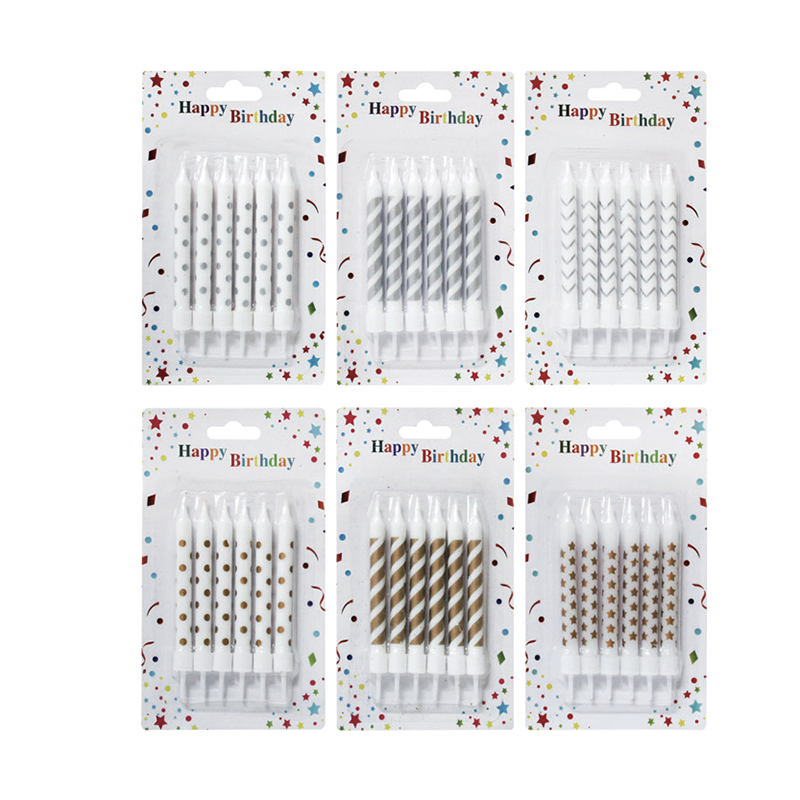
The original and most widely used birthday candle format: a thin, straight wax cylinder in a single color. Classic tapers in mixed or coordinated colors are appropriate for every age and every party style, from a toddler's first birthday to a grandparent's 80th. They are the default choice when the primary goal is the traditional candle-blowing ceremony rather than a specific decorative effect. Standard taper birthday candles burn for approximately 3 to 5 minutes at a consistent rate, providing enough time for the singing of Happy Birthday and the wish-making ritual without excessive wax drip.
Number Candles
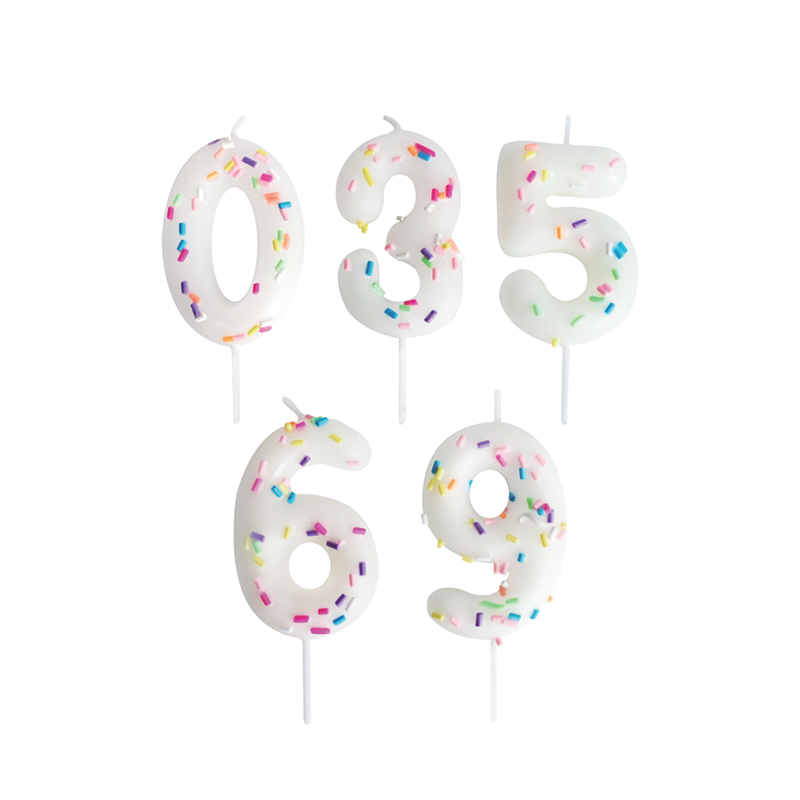
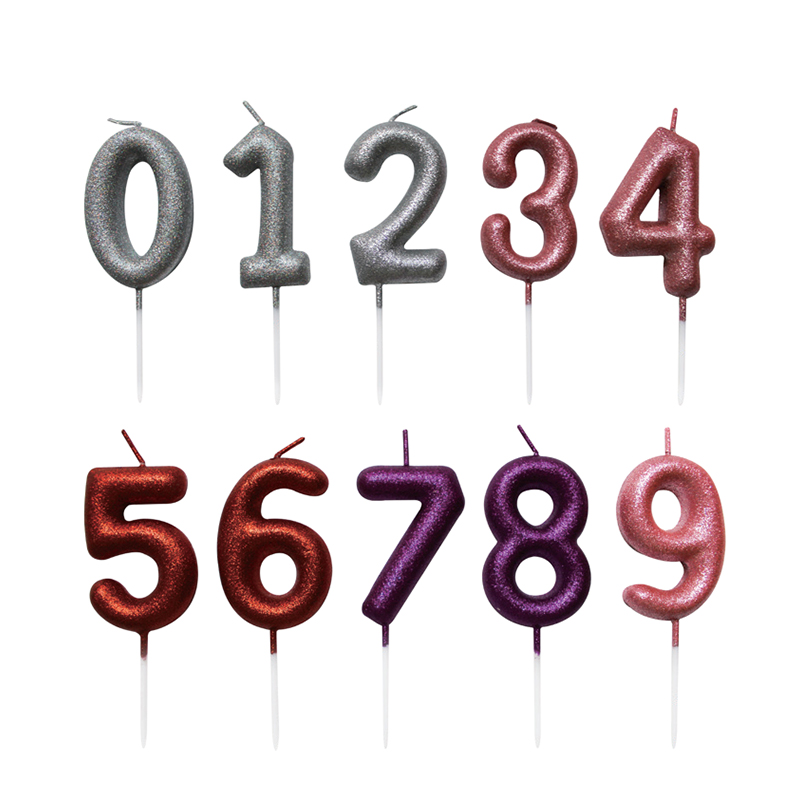
Molded into the numerals 0 through 9, number candles allow the celebrant's age to be displayed directly on the cake without requiring individual candles for each year — essential for milestone birthdays where the traditional one-candle-per-year approach would create a fire hazard or cover the entire cake surface. Number candles are available in metallic gold, silver, and rose-gold finishes for adult milestone birthdays (30, 40, 50, etc.) and in bright primary colors for children's parties. Their practical advantage is significant: a 50th birthday cake requires two number candles rather than 50 individual tapers, eliminating both the visual clutter of a heavily candled cake and the practical challenge of lighting 50 candles before the first ones burn down.
Sparkler and Fountain Candles
Sparkler candles — also called firework candles or fountain candles — emit a shower of gold or silver sparks rather than (or in addition to) a conventional flame. They are among the most visually spectacular party candle options, creating a dramatic fireworks-like display on the cake surface that generates immediate excitement from guests of all ages. Sparkler candles are particularly effective for adult milestone birthdays, New Year-themed parties, and any occasion where a conventional candle display would seem understated.
Safety is a relevant consideration with sparkler candles: they burn at higher temperatures than conventional wax candles and produce particles that must not contact eyes or skin. Keeping guests at least 30 cm back from the cake during the sparkler display is standard safety guidance. The display typically lasts 45 to 90 seconds — long enough for a dramatic entrance with the cake but short enough to manage safely in indoor settings.
Musical and Novelty Candles
Musical birthday candles incorporate a small electronic module in the base that plays a melody — typically Happy Birthday — when the candle is lit. The module activates via the heat of the flame and stops when the candle is blown out, creating an automatically synchronized musical accompaniment to the ceremony. These are particularly effective at parties for young children, where the unexpected combination of fire and music creates delight, and at surprise parties where the musical candle adds an additional element of festive impact to the cake's entrance.
Relighting (Magic) Candles
Relighting candles — commonly called trick or magic candles — relight themselves a few seconds after being blown out, because the wick contains a compound (typically magnesium) that ignites from the residual heat of the wick after the flame is extinguished. The resulting sequence of the birthday person blowing confidently, the candles briefly appearing out, and then all relighting simultaneously, reliably produces laughter and surprise from guests and a second attempt from the birthday person. These are one of the few party props whose entertainment value increases with the age of the group — adult parties often find magic candles funnier than children do, because adults are less expecting of the trick.
Shaped and Themed Candles
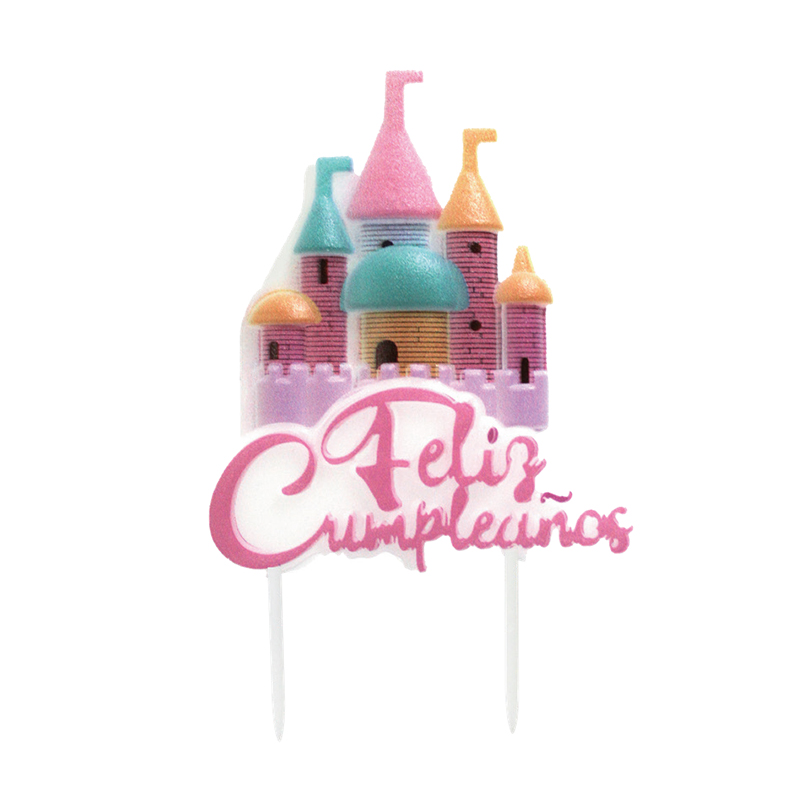
Candles molded into character shapes, animals, crowns, stars, and other forms allow the candles themselves to contribute to the visual theme of a decorated cake without any additional decoration. A unicorn-themed birthday cake, for example, is completed by unicorn-shaped candles in coordinating colors. Themed candles extend the decorative design of the cake into the candle element rather than treating candles as generic additions, creating a more coherent and intentional party aesthetic.
The Birthday Candles collection at Gewo Candle includes all of these categories — classic tapers, number candles, sparkler candles, musical options, and themed designs — manufactured to consistent burn quality standards with food-safe wax and lead-free wicks, making them appropriate for use on cakes served to guests of all ages.
Birthday Candles by Party Type: Matching the Candle to the Occasion
Selecting candles that suit the specific type and tone of the party is one of the simplest ways to elevate the birthday ceremony from routine to memorable. The table below summarizes the most appropriate candle types for common party contexts.
| Party Type |
Recommended Candle Style |
Key Consideration |
| Baby's First Birthday |
Single classic taper; soft pastel or white |
Simple visual; no smoke hazard near infant; parent blows |
| Children's Party (ages 3 to 10) |
Character or shaped candles; bright color tapers; musical |
Novelty and visual excitement; age-appropriate safety |
| Teenager's Party |
Number candles in metallic finish; sparkler candles |
Age-appropriate style; photogenic for social media |
| Adult Milestone (30, 40, 50+) |
Gold or silver number candles; luxury sparkler fountains |
Elegant, dramatic; appropriate for the significance of the |
| Surprise Party |
Pre-lit sparkler candles; musical candles; magic |
Maximum impact at the moment of reveal; memorable reaction |
| Themed Party (unicorn, princess, superhero) |
Shaped or character candles matching the theme; |
Extends theme coherence to the cake centerpiece |
| Intimate Family Gathering |
Traditional taper candles in family's preferred colors |
Honors tradition without distraction; allows focus on |
| Office or Workplace Party |
Number candles or a small cluster of classic tapers |
Practical and inclusive; avoids smoke in office |
Candle style recommendations by party type and occasion
The Social Function of Birthday Candles: Creating Shared Memory
Birthday candles do something for a party that decorations, music, and food cannot do in isolation: they create a shared narrative moment that all guests experience simultaneously and remember collectively. This social function is one of the most important reasons birthday candles remain central to celebration culture across generations and cultures.
Synchronized Participation: Singing and Watching Together
The moment the birthday cake arrives with lit candles, the social dynamics of the room change. Conversations stop, people reposition to see the cake, and the group spontaneously begins singing Happy Birthday — arguably the most universally known song in the world. According to the Guinness World Records, Happy Birthday to You is the most recognized song in the English language and one of the most recognized songs globally. The candles are what triggers this spontaneous, synchronized group behavior. Without the candles on the cake, there is no agreed-upon visual cue that the group should begin singing together.
The Creation of Party Photographs That Last Decades
Birthday photographs taken at the moment of candle blowing are among the most emotionally resonant personal photographs most people possess. They capture a specific age, a specific expression, a specific gathering of people — many of whom may not all be together again. The candle-lit cake in the photograph anchors the memory to a precise moment and milestone. Family albums and digital photo libraries are filled with these images across generations: a grandmother blowing out candles at 70, the same person's mother at 40, and their child at 7 — a visual timeline of a family's life measured in birthday candles.
Creating Anticipation and Ceremony Within the Party
A birthday party without candles risks becoming simply a gathering with cake. The arrival of a lit birthday cake creates a structured ceremonial sequence — the darkening of the room if possible, the procession of the cake to the table, the gathering of guests, the singing, the wish, the blowing — that gives the party a climactic moment with a clear beginning, middle, and end. This ceremonial structure is what distinguishes a birthday party from an ordinary social gathering, and the birthday candle is the central prop that makes the ceremony possible.
Parties that skip the candle ceremony in the interests of simplicity or time often feel, in retrospect, as though something essential was missing — because something essential was missing. The candles are not incidental to the birthday party; they are, in a meaningful sense, the birthday party's most important functional element.
Birthday Candles Across Cultures: A Universal but Varied Tradition
While the birthday candle tradition originated in Western Europe, versions of flame-centered birthday celebration exist across many cultures, confirming that the symbolic power of light and fire in marking human milestones is a near-universal human impulse.
China: Longevity Noodles and Candles
In contemporary Chinese birthday celebrations, particularly for milestone ages (60th, 70th, and 80th birthdays), birthday cakes with candles have been widely adopted alongside traditional longevity noodles and red egg ceremonies. The combination of traditional symbolism and the Western candle ritual reflects the global spread of the birthday candle tradition across cultural contexts where it overlaps with existing celebration practices around fire and light.
Mexico: Pinhata and Candles Together
Mexican quinceaneara celebrations (marking a girl's 15th birthday) and general birthday parties (cumpleanos) incorporate candles on elaborate decorated cakes alongside other celebration elements including the pinhata. The candle-blowing moment — called apagar las velas (extinguishing the candles) — carries the same wish-making significance as in Northern European tradition and is equally central to the emotional peak of the celebration.
South Korea: Tteok (Rice Cake) and Light
Traditional Korean birthday celebrations centered on rice cakes (tteok) with symbolic colored ingredients rather than candles. Contemporary South Korean birthday culture has enthusiastically adopted birthday cakes with candles, often combined with highly elaborate cake decoration and photography that reflects the strong visual culture of Korean social media. The birthday candle moment has been integrated into Korean celebration culture within two to three generations — a testament to the cross-cultural appeal of its core ritual structure.
The Global Consensus
The fact that birthday candles have been adopted voluntarily across cultures with very different celebration traditions — without being imposed through colonization or commercial pressure alone — suggests that the tradition fulfills human needs that are genuinely cross-cultural: the need to mark time, to make a wish, to gather around light, and to create a shared ceremonial moment. This cross-cultural resonance is part of what makes birthday candles important: they work because they connect to something genuinely universal in human experience.
Practical Guidance: Getting the Most From Birthday Candles at Your Party
The ceremonial and emotional importance of birthday candles is best realized when the practical aspects of their use are handled well. The following guidance covers the most common party planning decisions around birthday candles.
How Many Candles to Use
The traditional approach — one candle per year of age — is most appropriate for children up to approximately age 12, where the number is manageable and the display of individual candles is visually meaningful. For teenagers and adults, number candles representing the age are more practical and create a cleaner visual. For very large milestone numbers (50, 60, 70), a single pair of number candles is easier to light, produces less smoke, and presents more elegantly than an equivalent number of individual tapers.
Lighting Candles Efficiently
For cakes with multiple candles, use a long-reach multi-flame lighter rather than a match or standard lighter to avoid burning fingers and to complete the lighting quickly before early-lit candles burn down significantly. Light candles in a consistent direction — left to right or outside to center — so that the lighting sequence is smooth and no candle is skipped. For sparkler candles, light them all simultaneously using a long lighter, or use the alternative technique of lighting one sparkler and using it to light the others in sequence, which takes approximately 3 to 5 seconds for a typical arrangement.
Creating the Right Atmosphere for the Ceremony
- Dim the room lights if possible before bringing in the cake — the contrast between the dim room and the glowing candles dramatically increases the visual and emotional impact of the moment
- Designate one person to lead the singing so the group starts together; an uncoordinated or hesitant start to Happy Birthday reduces the ceremonial quality of the moment
- Give the birthday person a moment of silence before they blow — this is when they make their wish, and rushing this step diminishes the personal significance of the ritual
- Have a designated photographer ready before the cake arrives, positioned to capture both the lit candles and the birthday person's face without using a flash that would flatten the candlelight
- For outdoor parties, have a lightweight wind shield or use drip-resistant candles to prevent the wind from extinguishing candles before the ceremony begins
Safety Considerations
- Keep long hair tied back for the birthday person during candle blowing, and ensure the cake is on a stable surface that cannot be knocked over during the ceremony
- For sparkler and fountain candles, keep all guests at least 30 cm clear of the cake during the display, and have a small bowl of water nearby to extinguish sparkler wires safely after the display ends
- Never leave lit birthday candles unattended or allow young children to handle lit candles unsupervised
- Use candle holders or push candles firmly into the cake so they cannot tip during transport or during the ceremony
- Remove candles from the cake before cutting and serving to prevent accidental wax contamination of cake slices
Choosing Candles That Match the Cake Aesthetic
The visual relationship between the candles and the cake decoration is something professional cake designers consider carefully. Metallic gold or silver candles complement a fondant-decorated cake with elegant metallic elements. Bright primary color tapers coordinate with a colorful buttercream design. Pearl or ivory candles suit a classic white wedding-style birthday cake. Selecting candles that reinforce rather than clash with the cake's visual design requires only a moment's thought at the point of purchase but significantly improves the overall presentation of the centerpiece.
The Birthday Candles range at Gewo Candle is organized by style, color, and occasion to make this selection straightforward, with options covering everything from minimalist classic tapers to elaborate sparkler fountains and shaped novelty candles for every party theme and age group.
The Emotional Significance of Birthday Candles at Different Life Stages
The importance of birthday candles shifts in character but not in significance as the birthday person moves through different life stages. Understanding this evolution helps party planners calibrate the candle ceremony to be genuinely meaningful for the specific age being celebrated.
Ages 1 to 5: Wonder and Sensory Delight
For very young children, the birthday candle is primarily a source of sensory wonder — the flame is visually fascinating, the warmth is palpable, and the collective singing and cheering from adults creates an atmosphere of magic and celebration that the child feels even before they fully understand its meaning. The single candle on a first birthday cake is one of the most photographed moments in family life — not because the baby understands what is happening, but because the image of a child experiencing that moment of lit-candle wonder is universally moving.
Ages 6 to 12: Mastery, Wishes, and the Joy of Being Celebrated
School-age children are fully engaged with the ritual dimension of birthday candles — they understand the wish, they feel the pressure and excitement of trying to blow all candles out in a single breath, and they experience the cheering response of the group as genuine personal recognition. For children in this age range, the candle ceremony is often the most important moment of their birthday. A 2019 survey by the American Psychological Association on childhood memories found that birthday celebrations were among the most frequently cited positive childhood memories in adults, with the candle-blowing moment specifically mentioned as a defining element.
Teenage and Young Adult Years: Social Currency and Aesthetics
For teenagers and young adults, the social media dimension of the birthday candle moment becomes significant. A dramatically lit cake with sparkler candles, metallic number candles, or an elaborate themed candle arrangement is inherently shareable content — it photographs beautifully, generates engagement from followers, and serves as visual confirmation of a celebration worth attending. At this life stage, the aesthetic quality and photogenic impact of the candle selection matters more than at any other age.
Milestone Adult Birthdays: Reflection and Significance
At 30, 40, 50, and beyond, the birthday candle ceremony takes on additional layers of meaning. The candles represent not just the current year but the accumulated years behind — a visual representation of life lived. For many adults, the birthday candle moment at a significant milestone birthday is genuinely moving in a way that earlier birthday parties were not. It is no coincidence that milestone birthday speeches and toasts are typically given immediately after the candle ceremony — the ritual creates an emotional opening for reflection and appreciation that other party elements do not.
Elder Birthdays: Legacy and Continuity
For elderly birthday celebrants, particularly those celebrating their 70th, 80th, or 90th birthdays, the candle ceremony often brings together multiple generations of family who may not all be in the same place at any other time of year. The shared ritual — often performed by the same person who blew out candles at family birthday parties decades earlier — creates a moment of continuity and legacy that is profoundly meaningful for both the celebrant and their family. The birthday candle, at this stage, is a symbol of life itself.